Tarta de Santiago (Santiago's cake)
Traditional Recipe to cook Tarta de Santiago (Santiago's cake)
A CORUÑA
12/13/20253 min read
The Essentials: Ingredients List (For a 24cm Round Cake)
Recipe Summary
Prep Time 15 minutes
Cook Time 35-45 minutes
Chill Time 1-2 hours (For slicing)
Servings 10-12 people (Round Cake)
Origin Santiago de Compostela, A Coruña, Galicia, Spain
Cuisine Spanish / Galician Traditional Dessert
The Structure (The Three Pillars):
250 g (2 1/2 cups) Finely Ground Almonds (Almendra Molida).
250 g (1 1/4 cups) Granulated Sugar.
5 Large Eggs.
The Flavor Agents (Crucial):
1 Large Lemon, zested (use only the bright yellow part).
1 Tbsp Powdered Cinnamon.
1-2 Tbsp Brandy, Cognac, or Orujo (optional, but highly traditional).
The Finish:
40 g Powdered/Confectioner's Sugar (for dusting).
A Stencil of the Cross of Santiago (essential for presentation).
Pilgrim's Delight: Mastering the Traditional Tarta de Santiago (Saint James' Cake) from A Coruña
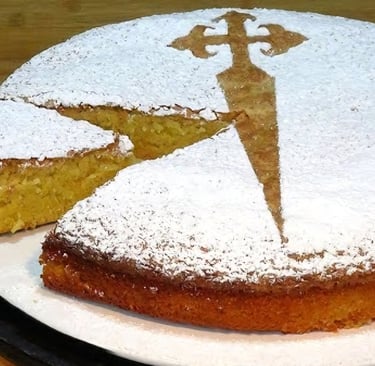
The Tarta de Santiago is arguably the most famous dessert to emerge from Galicia and is instantly recognizable by the powdered sugar stencil of the Cross of Santiago (Saint James) (Cruz de Santiago) that adorns its surface. While the cake is universally beloved across the region, its prominence is deeply tied to the end of the Camino de Santiago in Santiago de Compostela, the capital of A Coruña province.
A Recipe Forged on the Camino
This cake is historically significant, with its origins tracing back to medieval times, appearing in recipe books as early as 1577. Its popularity solidified as pilgrims completed their arduous journeys, seeking sustenance and celebration.
The Tradition of Purity
The Tarta de Santiago is fundamentally a gluten-free cake, relying entirely on ground almonds for its structure. This tradition is important: it ensures a dense, moist, and intensely flavorful result. The classic A Coruña method emphasizes the delicate balance between the rich, oily sweetness of the almonds, the bright acidity of the lemon zest, and the unique, warm note provided by a splash of local brandy or Orujo (Galician pomace brandy). It's a simple, honest, and satisfying cake, perfectly reflecting the spirit of the pilgrimage.
Process
Step-by-Step Mastery: The Simple Almond Blend
Phase 2: Building the Batter (No Flour)
Adding the Almonds: Gently fold the finely ground almonds into the egg and sugar mixture using a spatula. Crucial: Do not use a whisk or mixer at this stage. Folding gently ensures the batter remains light and does not become oily. The resulting batter will be thick and pourable, like a heavy custard.
Preheat and Pan Prep: Preheat your oven to 180°C (350°F). Grease and line a 24cm round cake pan with parchment paper. Alternatively, use a base of shortcrust pastry (masa quebrada) for a crust, though the flour-free version is the most common modern classic.
The Bake: Pour the batter into the prepared pan. Bake for 35 to 45 minutes.
Doneness Check: The cake is done when the edges are golden brown and set, and a toothpick inserted into the center comes out clean. The cake will be dense and may crack slightly on top.
Cooling: Remove the cake from the oven and let it cool completely on a wire rack. It must be completely cool before the final, iconic step.
Phase 3: Baking
Phase 1: Preparation of the Base
The Whisk: In a large bowl, whisk the five large eggs lightly until they are just combined and frothy.
Sweet Integration: Add the granulated sugar to the eggs and whisk until the sugar is almost dissolved and the mixture is pale yellow.
Aromatics: Stir in the lemon zest, powdered cinnamon, and the brandy/Orujo (if using). The Orujo adds a unique, warming depth that is characteristic of the authentic Galician recipe.
Phase 4: The Iconic Finish (The Cross of Santiago)
The Unmold: Once completely cooled, carefully invert the cake and remove the parchment paper.
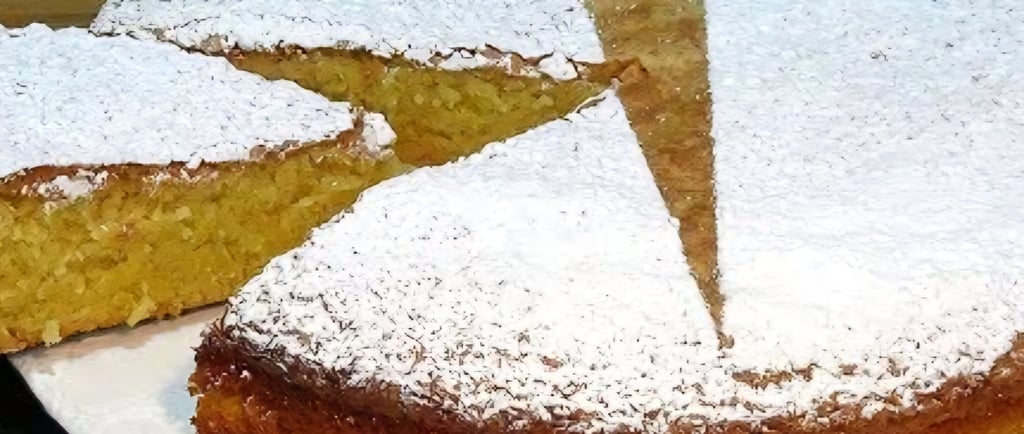
The Stencil: Place the Cross of Santiago stencil precisely in the center of the cake. This symbol, which represents the sword of Saint James, is the defining feature of the dessert.
The Dusting: Using a fine-mesh sieve, generously dust the entire surface of the cake with powdered/confectioner's sugar, ensuring the area inside the stencil is completely covered.
The Reveal: Very carefully lift the stencil off the cake. The striking contrast between the dark golden cake and the white cross is revealed.
Phase 5: Serving
Resting: Although ready immediately, the Tarta is best served after it has rested and chilled for 1-2 hours, as this concentrates the flavor and makes slicing easier.z
Presentation: Slice and serve the cake alongside a strong, traditional Spanish coffee or, most appropriately, a small, cold glass of Orujo or Licor de Hierbas (Herbal Liqueur)
Expert Tips for a Perfect Finish
Almond Quality: The flavor is derived entirely from the almonds. Use fresh, high-quality ground almonds, or grind blanched almonds yourself for the freshest taste.
The Glaze: Do not glaze this cake; the texture is intentionally dry and dense, meant to contrast with the sweetness of the sugar.
The Crust (Optional): If using a pastry base, bake the shortcrust pastry for 10 minutes before adding the filling and baking again. However, the flourless cake is the purest form.
Pairing: Enjoy with a traditional Galician Café de Pota (Asturian pot coffee) or a digestif of local Orujo to complete the authentic experience.