
Squid Rings
Traditional Recipe to cook Squid Rings
CANTABRIA
12/11/20254 min read
The Essentials: Ingredients List (For 4 People - Tasting Portion)
Recipe Summary
Prep Time 20 minutes
Coating Rest Time 30 minutes (Essential for a crisp result)
Cook Time 5-7 minutes
Servings 4 people (Tapa or Starter)
Origin Santander, Cantabria, Spain
Cuisine Spanish / Cantabrian Coastal
The Star:
750 g (1.6 lbs) Fresh Squid (Calamares), cleaned. (Medium-sized is ideal for rings).
The Coating (The Key to Crispness):
200 g (1.5 cups) All-Purpose Flour.
1 Large Egg, separated (yolk and white).
100 ml (approx. 7 tbsp) Cold Sparkling Water or Beer.
1 tsp Baking Powder (The secret leavening agent).
1/2 tsp Coarse Sea Salt, plus more for seasoning.
For Frying and Serving:
1.5 Liters (approx. 6 cups) Mild Olive Oil or Sunflower Oil (for deep frying).
2 Lemon Wedges (for serving).
Crispy Perfection: Mastering the Authentic Cantabrian Squid Rings (Calamares a la Romana)
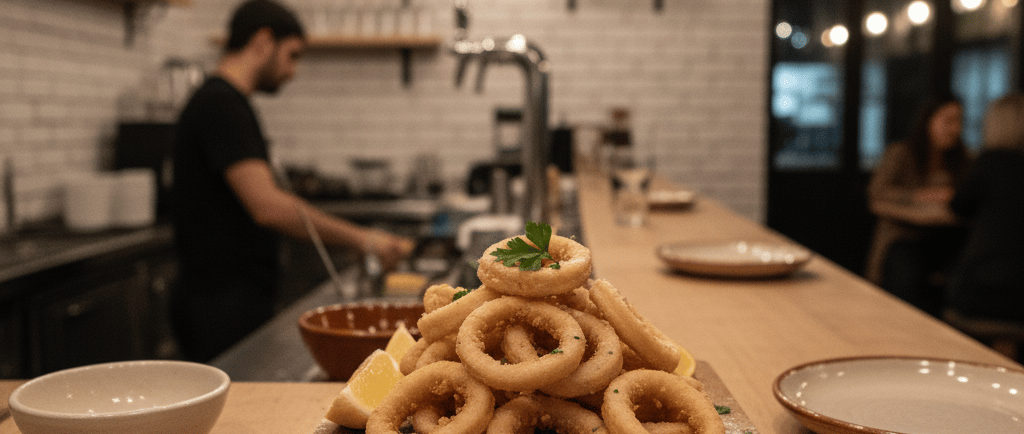
From the busy port city of Santander to the picturesque coastal villages, few dishes are as ubiquitous and beloved in Cantabria as perfectly fried Squid Rings (Calamares a la Romana). This simple preparation transforms the humble squid into an irresistible tapa or appetizer. In Cantabria, the freshness of the squid—often local rabas (small squids) caught in the Cantabrian Sea—is paramount, demanding a technique that respects the product: a quick fry in hot oil to achieve a crisp, light coating without becoming oily or rubbery.
The Everyday Icon of the Cantabrian Coast
The tradition of Calamares a la Romana is an integral part of Cantabrian coastal life. Unlike the sophisticated, elaborate seafood stews, this dish is accessible, quick, and enjoyed year-round. It is the mandatory accompaniment to a mid-morning coffee or a pre-lunch vermú on any terrace overlooking the Bay of Santander.
The Cantabrian Secret
The real difference in the Cantabrian style lies in the precise preparation of the coating and the cooking temperature. The goal is to avoid the thick, rubbery texture sometimes found in generic fried squid. Instead, the batter should be thin, light, and almost fragile, giving way to the tender, sweet calamari beneath. This is a true celebration of Spanish deep-frying artistry (freír).
Process
Step-by-Step Mastery: Achieving the Perfect Batter
Phase 2: Making the Light Batter
The Base: In a large bowl, whisk together the flour, baking powder, and 1/2 tsp of salt.
The Liquid: In a separate bowl, whisk together the egg yolk and the cold sparkling water (or beer). The cold temperature helps activate the baking powder and yeast, ensuring a light coating.
Integration: Pour the liquid mixture into the dry ingredients and whisk briefly until just combined. Do not overmix; a few small lumps are okay. Overmixing develops gluten, leading to a tough coating.
The White Secret (Optional but Recommended): In a very clean bowl, whisk the remaining egg white until stiff peaks form. Gently fold the stiff egg white into the batter. This incorporates air and makes the final coating incredibly light and airy—a classic Cantabrian trick.
Resting: Cover the batter and let it rest in the refrigerator for at least 30 minutes. This allows the flour to fully hydrate and the gluten to relax, which is key to a non-chewy texture.
Heating the Oil: Use a deep, heavy-bottomed pan or deep fryer. Heat the frying oil to a high temperature, ideally 180°C (350-360°F). The oil must be aggressively hot to ensure the batter puffs up and crisps immediately.
The Coating: Dip the seasoned, dry squid rings into the chilled batter. Allow any excess batter to drip off—you want a thin, even coat.
Frying in Batches: Carefully drop the coated squid rings into the hot oil, ensuring you do not overcrowd the pan. Overcrowding instantly drops the oil temperature, resulting in soggy, greasy calamari. Fry in small batches of 8-10 rings.
The Cook: Fry for only 2 to 3 minutes per batch, flipping once, until the squid rings are a beautiful pale golden-yellow color.
Draining: Use a slotted spoon to transfer the fried rings immediately to a wire rack or a plate lined with paper towels to drain excess oil.
Phase 3: The Frying Process
Phase 4: Serving and Presentation
Immediate Seasoning: While the rings are still piping hot, season them immediately and liberally with coarse sea salt. The heat ensures the salt adheres perfectly.
Plating: Serve the Calamares a la Romana immediately on a platter, piping hot and arranged neatly. Garnish with two lemon wedges.
Phase 1: Preparing the Squid
Cleaning and Slicing: Clean the squid thoroughly, removing the head, internal organs, and the transparent quill. Peel the thin purple membrane from the outside of the mantle. Slice the mantle into rings about 1 cm (1/2 inch) thick.
Drying: Place the squid rings on paper towels and pat them completely dry. This step is crucial, as any moisture will make the batter runny and prevent crispness.
Initial Seasoning: Place the dry squid rings in a bowl and season lightly with salt.
Expert Tips for a Perfect Finish
The Double Dry: The failure of this dish often stems from moisture. Ensure the squid is thoroughly dried before salting, and then the batter is rested and chilled before frying.
The Sizzle Rule: The oil must sizzle aggressively when the squid hits it. If it doesn't, the oil is too cold, and you will end up with oil-soaked rings rather than crispy ones. Wait patiently for the oil to reach the correct temperature between batches.
Oil is Flavor: Use a fresh, clean oil. While sunflower or vegetable oil works, using a mild, clean olive oil provides a superior, authentic Spanish flavor.
Pairing: This dish is traditionally paired with a cold Cantabrian beer or a crisp, dry white wine like a Rueda or an Albariño.