
Scorpionfish cake
Traditional Recipe to cook Scorpionfish cake
ASTURIAS
12/12/20254 min read

The Essentials: Ingredients List (For a Large Loaf Pan)
Recipe Summary
Prep Time 25 minutes
Cook Time 50-60 minutes
Chill Time 4 hours (Essential for setting)
Servings 8-10 people (Terrine/Cake)
Origin Asturias, Spain (Cantabrian Coast)
Cuisine Spanish / Asturian Seafood Starter
The Star Fish:
1 kg (approx. 2.2 lbs) Whole Scorpionfish (Cabracho). (Substitute with Monkfish or Red Snapper if cabracho is unavailable, but the flavor will be milder).
The Liquid Base:
200 ml (approx. 3/4 cup) Heavy Cream (35% fat).
200 ml (approx. 3/4 cup) Tomato Frito or thick canned crushed tomatoes (not watery paste).
The Binder and Flavor:
4 Large Eggs.
1 Small Onion, finely diced.
2 Cloves Garlic, minced.
2 tbsp Extra Virgin Olive Oil.
1 tbsp Brandy or Cognac (optional, but recommended for flavor depth).
Salt and White Pepper, to taste.
The Ruby Red Delicacy: Mastering Scorpionfish Cake (Pastel de Cabracho) from Asturias
The Pastel de Cabracho (Scorpionfish Cake) is a star appetizer that brilliantly showcases the culinary creativity of Asturias. This dish is an exquisite, savory paté or terrine, prized for its delicate fish flavor, creamy texture, and stunning coral-red color. It is a modern classic, having gained immense popularity along the Cantabrian coast, perfect for celebrations, holidays, or as an elegant starter (entrante).
A Modern Classic from the Asturian Coast
The Cabracho (Scorpionfish or Rockfish) is a visually striking fish, known for its spiny exterior and strong, complex flavor—a flavor that intensifies when cooked.
The Origin
While the exact origins are often debated among the coastal regions, the popularity and classic formulation of this cake are frequently attributed to the renowned Asturian chef, Tino Helguera, from the 1970s. The Tarta de Cabracho was born from the desire to elevate a flavorful but difficult-to-prepare fish into a sophisticated presentation. By boiling and flaking the fish, then blending it with cream and tomato, the cooks discovered a way to create a smooth, beautiful, and deeply satisfying dish that is now a staple in high-end Asturian sidrerías (cider houses) and restaurants. It is an enduring symbol of how modern Spanish cuisine can simplify and celebrate intense traditional flavors.
Process
Step-by-Step Mastery: The Creamy Baked Paté
Phase 2: Building the Flavor Base
The Sofrito: In a small pan, heat the olive oil over medium heat. Add the finely diced onion and minced garlic. Sauté gently for 8 to 10 minutes until the onion is completely soft and translucent. This sweet base balances the strong fish flavor.
The Blend (Optional): If using brandy, add it to the sofrito and let it cook off for 1 minute. Add the tomato frito and cook for 5 minutes, seasoning with salt and pepper.
Preheat and Prepare: Preheat your oven to 180°C (350°F). Grease a standard loaf pan (approx. 24 cm / 9 inches) and line the bottom with parchment paper.
The Mixer: Place the flaked cabracho fish, the sofrito mixture, the heavy cream, and the four eggs into a food processor or blender.
Blending: Blend the mixture until it is perfectly smooth and uniform. Scrape down the sides as necessary. The mixture should be thick and creamy, with a distinct coral-pink hue (this color intensifies after baking).
Final Seasoning: Taste the mixture and adjust the salt and pepper.
Baking in a Water Bath (Baño María): Pour the batter into the prepared loaf pan. Place the loaf pan inside a larger oven-proof dish. Pour boiling water into the larger dish until it comes halfway up the sides of the loaf pan. This water bath is crucial for ensuring the paté cooks evenly and stays incredibly moist.
The Cook: Bake for 50 to 60 minutes. The cake is done when the center is set (a knife inserted into the center comes out clean) but still feels slightly jiggly.
Phase 3: The Blend and Bake
Phase 4: Serving and Presentation
Cooling and Setting (Crucial): Remove the cake from the oven and carefully remove the loaf pan from the water bath. Let it cool completely to room temperature, then cover it and chill in the refrigerator for at least 4 hours (preferably overnight). This allows the eggs to fully set the paté into a sliceable terrine.
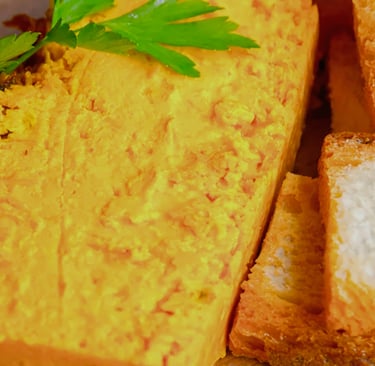
Serving: Unmold the tarta onto a platter. It is traditionally served sliced, with a light topping of mayonnaise (often mixed with ketchup for a pink 'salsa rosa') or a simple vinaigrette, and always accompanied by thinly sliced crusty bread or melba toast.
Phase 1: Preparing the Fish (The Gentle Cook)
Cleaning and Boiling: Clean the fish thoroughly (or have your fishmonger do it). Place the whole fish in a large pot and cover it with cold water. Add a pinch of salt.
The Simmer: Bring the water to a gentle simmer. Cook for 15 to 20 minutes, or until the flesh flakes easily. Do not boil vigorously, as this can toughen the meat.
Flaking: Remove the fish and let it cool slightly. Carefully remove the skin and bones. Crucial: You must meticulously remove every single bone. Flake the flesh into a bowl. You should aim for about 400 g (14 oz) of cooked, clean flesh.
Expert Tips for a Perfect Finish
Meticulous Deboning: Take extreme care when flaking the fish. The cabracho is bony, and even one small bone will ruin the smooth texture of the paté.
Fish Quality: While cabracho is best, if substituting, choose a white fish with some fat content and a strong flavor (not a bland white fish).
The Water Bath: Do not skip the baño maría! It guarantees a slow, humid cook, preventing the delicate eggs and cream from curdling or drying out the edges, resulting in a silkier texture.
Pairing: The creamy texture and deep flavor are beautifully cut by the acidity of the traditional Asturian pairing: a glass of cold, crisp Sidra Natural (natural Asturian cider).