
Pulpo á feira (Octopus to Feira)
Traditional Recipe to cook Pulpo á feira (Octopus to Feira)
A CORUÑA
12/11/20254 min read
The Essentials: Ingredients List (For 4 People - Tasting Portion)
Recipe Summary
Prep Time 10 minutes
Cook Time 45-60 minutes
Servings 4 people (Tapa or Starter)
Origin A Coruña, Galicia
Cuisine Spanish / Galician Street Food
The Star:
1.5 kg (approx. 3.3 lbs) Fresh or frozen Octopus. (One large octopus, or two medium ones).
The Accompaniments:
6 Large (approx. 1 kg) Galician-style potatoes (starchy varieties like Russet or Maris Piper).
The Seasoning (The Holy Trinity):
100 ml (approx. 1/2 cup) Extra Virgin Olive Oil (high quality is essential).
1 tbsp Sweet Paprika (Pimentón de la Vera Dulce).
1 tsp Hot Smoked Paprika (Pimentón de la Vera Picante) (optional, for a kick).
Coarse Sea Salt (Sal Marina Gruesa), specifically for finishing.
For Cooking:
A Large, Deep Pot (Earthenware or stainless steel).
Plenty of Water (approx. 5 liters / 5 quarts).
The Galician Icon: Mastering the Authentic Pulpo á Feira (Fair-Style Octopus)
The sound of scissors rapidly slicing perfectly cooked octopus, the aroma of paprika and olive oil filling the air, and the vivid purple and white of the tender seafood—this is the magic of Pulpo á Feira. This dish, known internationally as Pulpo a la Gallega, is more than just street food; it is an icon of Spanish gastronomy, demanding respect for its simplicity and precision in its preparation.
A Tale from the Inland: The Surprising Origin
While octopus is inherently a coastal product, the tradition of Pulpo á Feira surprisingly did not originate on the Galician shoreline. Its roots lie deep in the interior of the region, particularly the province of Ourense.
Historically, travelling vendors known as pulpeiras were tasked with transporting and preparing octopus at rural markets and local fairs (feiras). They would receive the dried or cured octopus, which was easier to transport inland without spoiling, and cook it fresh on site. The most famous pulpeiras came from the area around the monastery of O Carballiño, Ourense. They perfected the simple seasoning: good local potatoes, the finest olive oil, and the vibrant Pimentón de la Vera.
Today, the spirit of the pulpeiras lives on. The dish remains a staple at every fair and celebration in Galicia, revered for its tender texture and perfectly balanced flavor profile, proving that the most memorable culinary experiences often require the fewest ingredients—just the right technique.
Process
Step-by-Step Mastery: The Art of Tenderizing and Cooking
Phase 1: Preparation (The Tenderizing Secret)
Freezing is Key: If you have fresh octopus, it is highly recommended to freeze it first for at least 48 hours. The freezing process breaks down the tough muscle fibers, achieving the necessary tenderness without hours of pounding. If using previously frozen octopus, skip this step.
Thawing and Cleaning: Thaw the octopus completely in the refrigerator. Rinse it well under cold water. Remove the eyes and the beak (the hard piece between the tentacles) if they haven't been cleaned yet.
Phase 2: The Boiling Process (The Asustado Technique)
Boiling Water: Bring a very large pot of water to a rolling boil. Do not add salt yet! The salt can toughen the octopus.
The "Scaring" (El Asustado): This is the most crucial step for a perfect texture. Using the octopus head as a handle, plunge the octopus into the boiling water for precisely 10 seconds, then immediately remove it. Repeat this process three times. This shock causes the tentacles to curl beautifully and seals the skin, ensuring the interior remains moist and tender.
The Long Cook: After the third asustado, plunge the octopus in completely. Reduce the heat to a simmer. Cook for approximately 45 to 60 minutes.
Timing Test: Start testing for doneness around the 45-minute mark. Pierce the thickest part of a tentacle with a skewer or a thin knife. It should offer slight resistance but feel tender, similar to a perfectly cooked potato.
Use the Cooking Water: While the octopus is resting, remove it from the pot (reserve the water—it's now purple-tinted and flavorful).
Potato Prep: Peel the potatoes and use the "chascado" technique (cut three-quarters, then snap) to break them into 3-4 cm chunks.
Cooking: Add the potato chunks to the reserved octopus water. Simmer until tender (about 15-20 minutes). Drain them completely.
Phase 3: Cooking the Potatoes
Phase 4: Assembly and Presentation
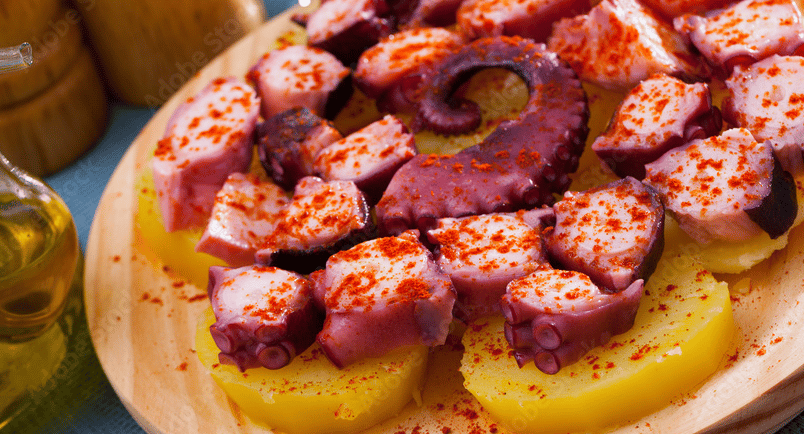
The Cut: Using kitchen scissors, cut the tentacles into thick slices, about 1 cm (just under half an inch) thick. Traditional pulpeiras use wooden platters to help the salt stick and to enhance the rustic presentation.
Layering: Arrange the cooked potato slices first on a flat wooden platter or plate.
The Star: Place the octopus slices liberally on top of the bed of potatoes.
The Finish (The Holy Trinity):
Drizzle generously with the highest quality Extra Virgin Olive Oil.
Sprinkle liberally with the mixture of sweet and hot paprika.
Finish with a good pinch of Coarse Sea Salt scattered over the top. This crunch of salt is essential for the authentic Pulpo á Feira experience.
Serve Immediately: The dish should be served warm, allowing the heat to slightly melt the oil and activate the paprika’s aroma.
Expert Tips for a Perfect Finish
The Salt is Crucial: Use coarse sea salt. The large crystals provide a textural contrast (a slight crunch) that is absolutely indispensable to the Pulpo á Feira flavor and experience. Do not substitute fine salt.
Octopus Water: The cooking water of the octopus, often referred to as "broth" or caldo, is sometimes served as a simple, warming shot on the side, highlighting the pure essence of the sea.
The Tools: While a knife works, using scissors to slice the octopus (as the pulpeiras do) is faster, gives a better rustic cut, and helps prevent the meat from tearing.
Wine Pairing: Pair this dish with a crisp, acidic white wine, such as an Albariño or a Godello, to cut through the richness of the oil and the smokiness of the paprika.