Pickled Sardines
Traditional Recipe to cook Pickled Sardines
CANTABRIA
12/12/20254 min read
The Essentials: Ingredients List (For 4 Servings)
Recipe Summary
Prep Time 20 minutes
Marinating Time 24 - 48 hours (Crucial for flavor)
Cook Time 20 minutes
Servings 4 people (Appetizer/Tapa)
Origin Coastal Cantabria, Spain
Cuisine Spanish / Cantabrian Traditional
The Star:
1 kg (approx. 2.2 lbs) Fresh Sardines, scaled and gutted. (Heads and tails can be kept or removed).
For Frying:
100 g (approx. 3/4 cup) All-Purpose Flour.
Coarse Sea Salt, to taste.
200 ml (approx. 1 cup) Olive Oil (for shallow frying).
For the Escabeche Liquid (The Marinade):
200 ml (approx. 3/4 cup) Extra Virgin Olive Oil.
150 ml (2/3 cup) White Wine Vinegar (Sherry vinegar is excellent).
100 ml (approx. 7 tbsp) Dry White Wine.
6 Cloves Garlic, peeled and sliced thickly.
2 Bay Leaves.
1 tsp Sweet Paprika (Pimentón Dulce).
1 tsp Black Peppercorns.
1 Small Carrot, peeled and thinly sliced (optional, for flavor and color).
The Mariner’s Preserve: Mastering Pickled Sardines (Sardinas en Escabeche) from Cantabria
The Sardinas en Escabeche is a beloved staple throughout the coastal region of Cantabria. This dish is a perfect blend of fresh seafood, potent vinegar, and fragrant spices. It is not just an appetizer; it is a testament to the old-world method of preservation (escabechar), which allowed fishermen and rural populations to enjoy their catch for weeks after it was brought ashore.
A Tradition of Preservation and Flavor
The technique of escabeche (pickling) was introduced to Spain by the Arabs and is derived from the Persian word sikbaj (a sweet and sour stew). In Northern Spain, the method was adapted to preserve oily fish like sardines and bonito.
Cantabrian Coastal Life
In Cantabria, with its long history of fishing and canning, the escabeche became an indispensable recipe. Unlike simple marinades, the escabeche requires the fish to be briefly fried before being submerged in a hot, acidic liquid infused with spices, garlic, and bay leaf. This two-step process—frying followed by acidification—ensures the fish is both cooked and preserved. The result is a wonderfully complex flavor profile that is simultaneously tangy, savory, and delicately spiced. It is a dish traditionally enjoyed cold, perfect as a tapa or as part of a light summer meal.
Process
Step-by-Step Mastery: The Preservation Technique
Phase 2: Preparing the Escabeche Liquid
Aromatic Base: In the same skillet used for frying (discarding the used frying oil first), heat the fresh 200 ml of Extra Virgin Olive Oil over medium-low heat. Add the thickly sliced garlic cloves, the bay leaves, and the black peppercorns.
Infusing: Sauté gently for 5 minutes until the garlic is golden brown. Add the sliced carrots (if using) and cook for another 2 minutes.
The Paprika: Remove the pan from the heat. Stir in the sweet paprika. Stir quickly for 30 seconds to bloom the spice, but do not allow it to burn.
The Liquid Balance: Pour in the white wine and the white wine vinegar. Return the pan to the heat and bring the liquid mixture to a boil. Let it boil for 2 minutes to allow the harshness of the alcohol and vinegar to cook off slightly.
Final Seasoning: Taste the escabeche liquid and add salt if needed.
Combining: While the escabeche liquid is still hot, pour it carefully over the fried sardines arranged in the non-reactive dish. Ensure the fish is completely submerged in the liquid.
Cooling: Allow the dish to cool down completely to room temperature.
The Wait: Cover the dish and transfer it to the refrigerator. The sardines must marinate for a minimum of 24 hours, but the flavor and texture are significantly better after 48 hours. The vinegar will subtly cook and tenderize the fish further, intensifying the flavors.
Phase 3: Marinating (The Key to Flavor)
Phase 4: Serving
Temperature: Sardinas en Escabeche are always served cold or at room temperature.
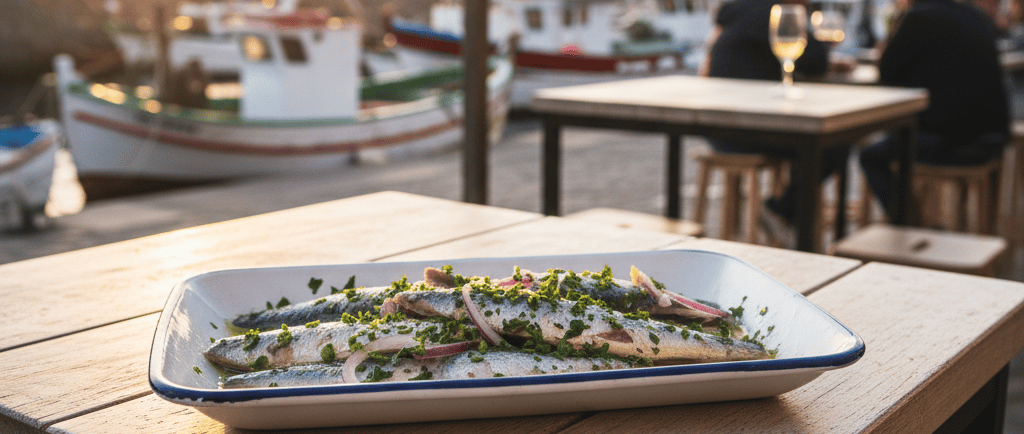
Presentation: Arrange the pickled sardines on a platter. Drizzle a generous amount of the escabeche sauce over them. Garnish with the sliced carrots, peppercorns, and garlic from the marinade.
Accompaniment: Serve with crusty bread (for soaking up the escabeche oil) or with boiled potatoes. The dish should not be confused with traditional canned sardines; the texture is moist, and the flavor is vibrant and acidic.
Phase 1: Preparation and Initial Cook
Cleaning the Sardines: Scale and gut the sardines. Rinse them under cold water and pat them completely dry. This is important for crisp frying. You can leave the heads and tails on or remove them, depending on preference.
Flour and Fry: Season the flour lightly with salt. Dredge the dried sardines lightly in the seasoned flour, shaking off any excess.
Shallow Fry: Heat the 200 ml of olive oil in a large skillet over medium-high heat. Fry the sardines in batches for about 2 minutes per side until they are golden brown and just cooked through. Do not overcook them.
Draining: Remove the fried sardines and place them on paper towels to drain excess oil. Set aside in a non-reactive glass or ceramic dish.
Expert Tips for a Perfect Finish
Non-Reactive Dish: Always use glass, ceramic, or stainless steel for the marinating process. Acidic liquids react with aluminum or certain plastic containers, which can affect the taste.
Full Submersion: Ensure the marinade completely covers the fish. If it does not, you must make a little more escabeche liquid to prevent the fish from spoiling or drying out.
The Vinegar Quality: Use a high-quality white wine vinegar. Sherry vinegar adds a beautiful complexity, but a simple white wine vinegar will also work well. Do not use industrial distilled white vinegar, as it is too harsh.
Pairing: The acidity of the dish requires a beverage that can stand up to it. Serve with a cold, crisp white wine or the traditional Cantabrian partner: chilled, tart cider (sidra).