
Mountain stew
Traditional Recipe to cook Mountain stew
CANTABRIA
12/13/20254 min read
The Essentials: Ingredients List (For 6 Servings)
Recipe Summary
Prep Time 15 minutes
Soaking Time 12 hours (Overnight for beans)
Cook Time 3 - 3.5 hours (low and slow)
Servings 6 people (Very Generous Portions)
Origin Cantabrian Mountains, Cantabria, Spain
Cuisine Spanish / Cantabrian Traditional Stew
The Foundation (Pulses and Greens):
500 g (2.5 cups) Dried Small White Beans (Alubia Blanca), soaked overnight.
1 kg (2.2 lbs) Berza (Winter Greens/Collard Greens/Sturdy Cabbage), cleaned and chopped.
The Pork Meats (The Flavoring Agents):
200 g (7 oz) Bacon/Salt Pork (Tocino), preferably a thick piece with skin.
1 Ham Bone or thick piece of cured Ham Hocks (Hueso de Jamón).
1 Smoked Chorizo Sausage (Chorizo), whole.
1 Blood Sausage (Morcilla), traditional Spanish style (often Asturian or de Burgos), whole.
The Aromatics and Finish:
2 Cloves Garlic, minced.
2 Tbsp Extra Virgin Olive Oil.
2 Tbsp Water.
Coarse Sea Salt, to taste.
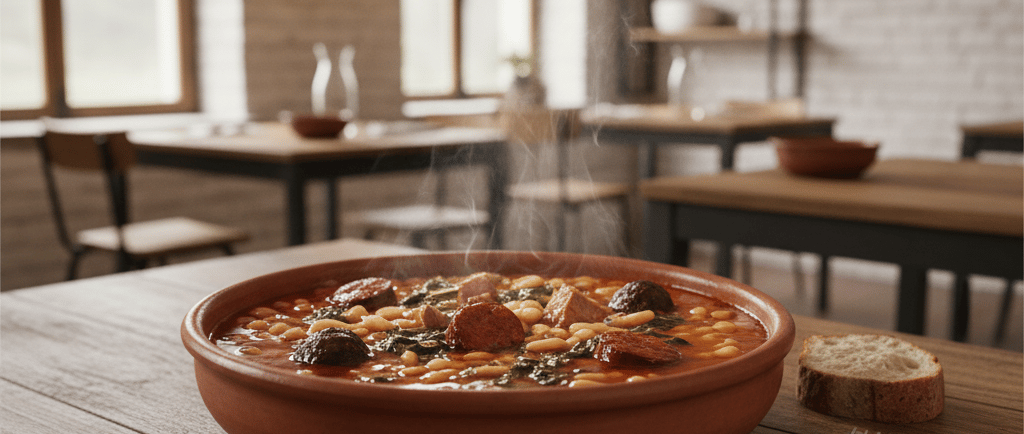
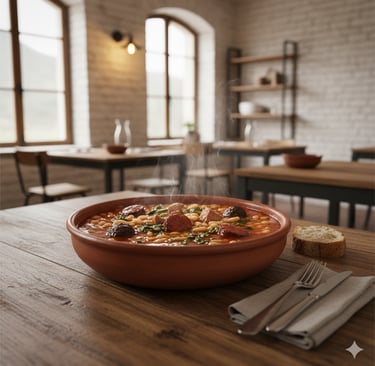
The Hearty Peak: Mastering the Traditional Cantabrian Mountain Stew (Cocido Montañés)
The Cocido Montañés is the quintessential winter dish of Cantabria, a powerful and deeply comforting stew that fuels life in the Cantabrian Mountains. Unlike other Spanish cocidos (like the Madrileño), which focus on garbanzos (chickpeas), the Montañés is built around the Alubia Blanca (small white bean) and Berza (collard greens/cabbage), providing a dense, dark, and incredibly nutritious base.
Forged in the Cantabrian Mountains
The dish originates in the remote valleys of the Cantabrian Range, where winters are long and cold. It is a humble, rural creation, designed to provide sustained energy for farmers, shepherds, and loggers.
The Ingredients of Necessity
The key to the Cocido Montañés is the combination of easily stored, durable ingredients: dried beans and preserved pork products from the traditional annual matanza (pig slaughter). The addition of the locally grown berza (a sturdy, dark green leaf, similar to kale or collard greens) is essential, providing a slightly bitter, earthy contrast to the rich, smoky fats of the pork. This dish is usually served as a single, hearty course, often substituting the heavy fabada asturiana in Cantabrian households, revered for its robust and nourishing qualities. It is the ultimate expression of rustic, honest Spanish cooking.
Process
Step-by-Step Mastery: The Slow Integration
Phase 2: The Initial Bean and Meat Cook
Start Cold: Drain the soaked beans. Place them in a large pot with the ham bone and the thick piece of salt pork/bacon. Cover generously with fresh, cold water (about 5 cm / 2 inches above the ingredients).
Skimming and Simmering: Bring the water to a boil over medium-high heat. Immediately reduce the heat to a very low, gentle simmer. Skim off any foam or impurities that rise to the surface.
The Tenderizing Simmer: Cover the pot loosely and simmer for 1.5 hours. Crucial: Do not stir with a spoon. Gently shake the pot occasionally to prevent sticking and allow the beans to cook without breaking.
Adding Greens: Add the chopped berza (or substitute greens) to the stew. Continue simmering, covered, for another 30 minutes.
Adding Sausages: Add the whole chorizo sausage and the blood sausage (morcilla) to the pot. Simmer for another 30 minutes.
Removing Meats: After 30 minutes, remove the salt pork, ham bone, chorizo, and morcilla. Cut the meats into large, rustic slices.
Phase 3: Integrating the Vegetables and Chorizo
Phase 4: The Final Seasoning and Thickening
Making the Garlic Infusion (Refrito): In a small pan, heat the olive oil. Add the minced garlic. Sauté gently until the garlic is fragrant (1-2 minutes—do not let it burn). Add the two tablespoons of water to the pan (it will sizzle) and immediately pour this garlic infusion (refrito) over the beans in the pot.
The Mash and Mix: Remove a large ladleful of beans and greens from the stew. Mash them roughly with a fork and return the mash to the stew. This traditional step adds natural starch and thickens the stew beautifully without needing flour or thickeners.
Final Simmer: Season the stew with coarse sea salt only if needed (the cured pork usually provides enough). Simmer for a final 15 minutes uncovered to allow the sauce to thicken to a dense, rich consistency.
Phase 1: Preparation (The Day Before)
Soaking the Beans (Crucial): Rinse the small white beans quickly. Place them in a large pot or bowl and cover them generously with cold, non-chlorinated water. Soak overnight for 12 hours.
Greens Prep: If using a very sturdy green like collard greens, blanch them first by boiling them briefly (3-5 minutes) in salted water. Drain, refresh in cold water, and chop. This removes some bitterness and allows them to cook down better.
Phase 5: Serving
The Rest: Turn off the heat and let the Cocido Montañés rest for 10 minutes before serving; this allows the flavors to deepen and the stew to settle.
Presentation: Serve the thick, dense stew in deep bowls. Traditionally, the meats (chorizo, morcilla, and sliced salt pork) are served on a separate platter alongside the stew for the diners to add as they wish, but it is often served all together in the bowl.
Expert Tips for a Perfect Finish
Berza Wash: If using tough winter greens, washing them very well is essential, and the initial blanching step helps tenderize them quickly and remove any grit.
No Stirring: As with the Asturian Fabada, the Cocido Montañés relies on gentle simmering and shaking the pot (meneado) to prevent the beans from breaking and becoming mushy.
The Morcilla Rule: Be gentle when adding the blood sausage (morcilla). It is delicate and can break, darkening the stew unnecessarily. Some cooks wrap it in parchment paper for the last 30 minutes to prevent breakage.
Pairing: The richness of this dish requires a beverage with structure. It pairs wonderfully with a robust, young Spanish red wine (like a Crianza from Rioja) or a cold, crisp Cantabrian Cider.