
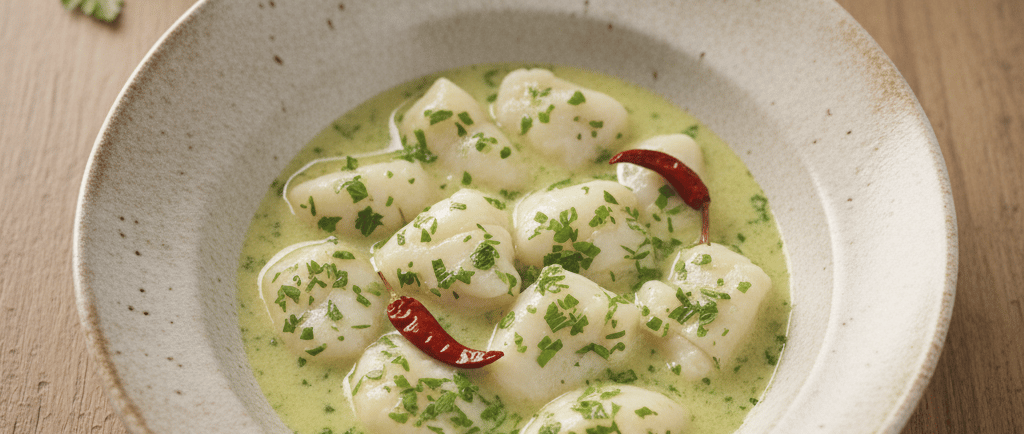
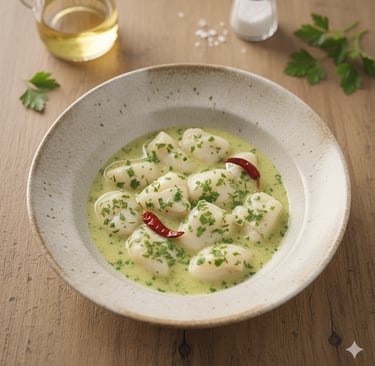
Hake Cheeks in Green Sauce
Traditional Recipe to cook Hake Cheeks in Green Sauce
BIZKAIA
12/11/20254 min read
The Essentials: Ingredients List (For 4 Servings)
Recipe Summary
Prep Time 15 minutes
Cook Time 15-20 minutes
Servings 4 people (Main Course)
Origin Bizkaia (Basque Country), Spain
Cuisine Spanish / Basque Seafood
A. The Star:
800 g (1.75 lbs) Hake Cheeks (Kokotxas de Merluza). (If unavailable, use thick, skin-on Hake fillets, cut into 4 pieces).
B. The Aromatics:
6-8 Cloves Garlic, sliced thinly.
1 Cayene Pepper or small dried red chili (optional, for a subtle warmth).
C. The Liquids & Garnish:
100 ml (approx. 7 tbsp) Extra Virgin Olive Oil (mild, fruity variety preferred).
100 ml (approx. 7 tbsp) Dry White Wine (Basque Txakoli or similar crisp white wine).
100 ml (approx. 7 tbsp) Fish Stock (homemade is best).
1 Large Bunch Fresh Parsley, very finely chopped (yield about 1/2 cup).
D. The Optional Shellfish:
12 Clams (Almejas), purged and rinsed.
4 Prawns or Langoustines (for added presentation).
E. Seasoning:
Coarse Sea Salt, to taste.
Basque Coastal Elegance: Mastering Hake Cheeks in Green Sauce (Merluza en Salsa Verde) from Bizkaia
The Merluza en Salsa Verde (Hake in Green Sauce) is a dish of stunning simplicity and deep cultural importance. While it is enjoyed across the Spanish Cantabrian coast, its most refined version hails from the Basque Country, specifically the fishing ports around Bizkaia (Bilbao, Bermeo, Getxo). This recipe relies on a single, magical ingredient: the silky, gelatinous nature of the hake, which forms the creamy emulsion of the 'green sauce' without any cream or flour.
The Secrets of the Bay of Biscay
Basque cuisine is celebrated worldwide for its respect for raw ingredients and technical precision. The use of Hake Cheeks (Kokotxas de Merluza) elevates this dish to luxury status. The kokotxas, the succulent, fleshy part under the jaw of the hake, are packed with natural gelatin. When cooked correctly, this gelatin is released into the hot olive oil and white wine, creating a thick, vibrant green sauce that adheres perfectly to the delicate fish.
The traditional preparation from Bizkaia is minimalistic: the hake, garlic, white wine, and a generous amount of fresh parsley—the ingredients are few, but the technique is paramount. Mastering the Salsa Verde is mastering the gentle 'shake' (meneado) of the pan, a ritual that turns simple liquids into a luxurious, emulsified coating.
Process
Step-by-Step Mastery: The Emulsion Technique
Hake Cheeks Prep: If using kokotxas, gently rinse them and pat them dry. If using fillets, ensure they are thick and, if possible, have the skin left on. Season the fish lightly with coarse sea salt.
Parsley Prep: The parsley must be very finely minced. Use a sharp knife or a food processor sparingly, ensuring it’s almost a powder—this is crucial for the uniform green color of the sauce.
Clam Prep: Ensure the clams are purged in heavily salted cold water for at least 2 hours to remove any sand.
Phase 1: Preparation
Phase 2: Building the Base (The Sofrito Light)
Infusing the Oil: In a wide earthenware casserole (cazuela) or a stainless steel pan, heat the Extra Virgin Olive Oil over medium-low heat. Add the thinly sliced garlic and the whole cayenne pepper (if using).
Sauté Gently: Sauté the garlic for about 3 to 4 minutes. The goal is to infuse the oil with garlic flavor; the garlic slices must become soft and fragrant but not brown or crisp, as this will compromise the final flavor of the sauce. Remove the cayenne pepper now.
The Wine Reduction: Increase the heat to medium. Pour in the dry white wine. Let it bubble and reduce by half (about 3 minutes).
Phase 3: The Hake and the Gelatin Release
Adding the Fish: Gently place the hake pieces into the pan, skin-side down (or the bottom, flatter side of the kokotxas). The fish should fit comfortably in one layer.
The Initial Cook: Cook the fish undisturbed for 3 minutes. This allows the gelatin (especially from the kokotxas or the skin) to start melting and releasing into the hot oil and wine mixture.
Adding the Liquid: Add the fish stock and the finely chopped parsley to the pan. Bring the liquid to a gentle simmer.
Phase 4: The Emulsion (The Basque Meneado)
The Crucial Shake: This is the moment of truth. Remove the pan from the heat. Begin to gently and continuously shake the pan (el meneado) using a rocking, circular motion. This action forces the oil, the stock, and the released gelatin from the fish to bind together into a creamy, emulsified sauce.
Monitoring the Sauce: Continue shaking. As the sauce cools slightly and emulsifies, you will see it transform from a thin liquid into a thick, glossy green sauce. If the sauce becomes too thick, add a tablespoon of fish stock and continue shaking. If it is not emulsifying, return the pan to low heat briefly and try again.
Phase 5: Final Integration (Clams and Prawns)
Adding Shellfish: Once the sauce has emulsified and coats the back of a spoon, return the pan to a very low heat. Add the purged clams and any optional prawns to the sauce.
Final Simmer: Cover the pan loosely and cook for 3 to 5 minutes, or until the clams have fully opened and the prawns are opaque. Do not shake the pan at this stage, as the clams might release too much liquid and break the emulsion.
Serving: Taste the sauce and adjust salt if necessary (often, the clams provide enough salinity).
Phase 6: Presentation
Serving: Serve immediately directly from the cazuela or plate the fish, ensuring a generous spoonful of the glossy green sauce, clams, and prawns accompanies each piece.
Expert Tips for a Perfect Finish
Temperature Control: The successful emulsification of the Salsa Verde depends entirely on low heat. If the sauce is too hot, the gelatin will not bind the fat and liquid properly. It must be a gentle rocking motion off the heat or over the absolute lowest setting.
The Parsley: Chop it fine, but add it only after the white wine has reduced. Adding it too early will result in a duller green color.
The Gelatin Source: If using regular hake fillets instead of kokotxas, ensure they are skin-on. The skin and the part of the fillet closest to the skin contain the most gelatin, helping with the sauce.
The Basque Pairing: The ultimate pairing for this dish is a slightly sparkling, highly acidic Basque white wine, such as Txakoli (Chacolí).