
Galician Tuna Pie
Traditional Recipe to cook Galician Tuna Pie
ORENSE
12/13/20254 min read

The Essentials: Ingredients List (For a Large Empanada)
Recipe Summary
Prep Time 45 minutes
Dough Rest Time 1.5 - 2 hours
Cook Time 50-60 minutes
Servings 8-10 people (Full Pie)
Origin Ourense, Galicia, Spain
Cuisine Spanish / Galician Savory Pastry
For the Authentic Galician Dough (Masa Gallega)
500 g (4 cups) All-Purpose Flour.
10 g (1 tbsp) Dry Baker’s Yeast, or 25g fresh yeast.
10 g (2 tsp) Salt.
250 ml (1 cup) Lukewarm Water.
100 ml (approx. 7 tbsp) Sofrito-Infused Olive Oil (reserved from the filling).
1 Egg Yolk (for brushing the top).
For the Tuna Filling (Zaragallada)
1 kg (approx. 5 large) White Onions, finely sliced. (The more onion, the better the result).
1 Large Green Bell Pepper, finely diced.
200 ml (approx. 3/4 cup) Extra Virgin Olive Oil.
2-3 Cans (approx. 500g / 18oz total weight) High-Quality Tuna (Atún or Bonito), packed in oil, drained but reserve the oil.
1 Tbsp Sweet Paprika (Pimentón Dulce).
4-6 Hard-Boiled Eggs, sliced (optional, but very traditional in Ourense).
Coarse Sea Salt, to taste.
The Portable Feast: Mastering the Traditional Galician Tuna Pie (Empanada de Atún Gallega) from Ourense
The Empanada Gallega de Atún is the undisputed national dish of Galicia, serving as the region's ultimate handheld meal and celebration centerpiece. While coastal areas boast seafood fillings, the Tuna Empanada became the staple in the interior provinces like Ourense. This version relies on ingredients that were easily preserved and transported, making it the perfect traveling food for pilgrims, farmers, and market vendors.
The Tradition of the Hearty Interior
In Ourense, far from the immediate coast, the Empanada often features preserved ingredients combined with fresh vegetables. The key to the Empanada here is not just the filling, but the perfect sofrito base and the soft, oily dough (masa).
The Ourense Essence
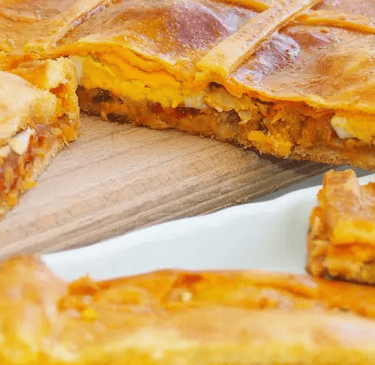
The interior Galician tradition demands a deep, savory filling (zaragallada) where the onion is the star—cooked until almost melted and sweetened. This slow-cooked onion forms a thick, aromatic layer that prevents the crust from becoming soggy. Crucially, the oil used to cook the sofrito is almost always incorporated into the dough itself, yielding a soft, flavorful, and uniquely yellow-hued crust that is nearly brioche-like in texture, differentiating it entirely from a flaky French pastry. The Empanada is a dish of community, meant to be sliced and shared among many people.
Process
Step-by-Step Mastery: The Onion and Oil Fusion
Phase 2: Making the Dough (Masa)
Activate Yeast: Mix the yeast with the lukewarm water and let stand for 10 minutes until foamy.
The Infused Dough: In a large bowl, combine the flour and salt. Create a well and pour in the activated yeast mixture and 100 ml of the reserved Sofrito Oil.
Kneading: Mix and then knead for 10 to 12 minutes until the dough is smooth, elastic, and has a rich yellow color from the infused oil.
First Rise: Place the dough in an oiled bowl, cover, and let it rise in a warm spot for 1.5 to 2 hours, or until doubled..
Adding the Tuna: To the drained, cooled sofrito mixture, add the high-quality drained tuna (flaked lightly with a fork). Mix gently.
Hard-Boiled Eggs (Optional): If using, gently fold in the sliced hard-boiled eggs. Crucial: Ensure the filling is completely cool before assembling, as warm filling will melt the dough.
Phase 3: Finalizing the Filling
Phase 4: Assembly and Baking
Preheat and Divide: Preheat your oven to 190°C (375°F). Divide the dough into two pieces: one piece slightly larger (the base) and one smaller (the lid).
Rolling the Base: Roll the larger piece of dough out thinly (about 3mm) and line your baking tray, leaving a large overhang.
Adding the Filling: Spread the cooled tuna zaragallada evenly over the dough, leaving a 2 cm (1 inch) border clear around the edges.
The Lid: Roll the smaller piece of dough to the same thinness. Place it over the filling.
Sealing and Design: Press the edges firmly together, trim the excess, and fold the edges over to seal the pie. Crucially, cut several small chimney holes in the center of the lid to allow steam to escape—this prevents the empanada from puffing up or developing a soggy bottom.
The Glaze: Brush the entire surface of the empanada with the beaten egg yolk for a classic glossy finish.
Baking: Bake for 50 to 60 minutes, or until the crust is deeply golden brown.
Phase 1: Preparing the Sofrito and Infusing the Oil (The Ourense Secret)
The Slow Sweat: In a very large, wide pan, heat the 200 ml of Extra Virgin Olive Oil over medium-low heat. Add the finely sliced onions and the diced green pepper. This sofrito must cook slowly and patiently for 30 to 40 minutes. The goal is not to brown them, but to reduce them to a deeply sweet, almost jam-like consistency.
Paprika and Integration: When the onions are completely tender, remove the pan from the heat. Stir in the sweet paprika and salt immediately. Stir quickly for 30 seconds to bloom the paprika.
Crucial Step—Infusing the Oil: Carefully drain the sofrito mixture using a fine mesh sieve placed over a bowl. Reserve the liquid oil that drips out—this flavorful oil is the Sofrito Oil and is vital for the dough. Set the drained onion/pepper mixture aside; this is the base of your filling.
Phase 5: Serving
Resting: Let the Empanada cool on a rack for at least 30 minutes before slicing. This allows the filling to settle and the crust to firm up.
Presentation: Slice into traditional square portions. The Empanada Gallega de Atún is best enjoyed at room temperature or slightly warm, making it the perfect picnic or party food.
Expert Tips for a Perfect Finish
Onion Volume: Do not be afraid of the sheer volume of onions. They cook down to a fraction of their original size and are the single most important ingredient for moisture and flavor.
Tuna Quality: Use high-quality tuna or bonito del norte preserved in olive oil. Drain it well to avoid excess moisture in the filling, but reserve the oil for flavor if you run short on sofrito oil.
Dough Flavor: The infusion of the sofrito oil into the dough is what makes the Galician empanada unique. It gives the crust a soft texture and a savory depth you cannot achieve with simple plain oil.
Pairing: The rustic flavors pair wonderfully with a robust, dry Ribeiro wine (local to Ourense) or a chilled, crisp Albariño.