
Cuttlefish with onions in their ink
Traditional Recipe to cook Cuttlefish with onions in their ink
CANTABRIA
12/11/20254 min read
The Essentials: Ingredients List (For 4 People - Tasting Portion)
Recipe Summary
Prep Time 20 minutes
Cook Time 1.5 - 2 hours (low and slow)
Servings 4 people (Main Course)
Origin Coastal Cantabria, Spainç
Cuisine Spanish / Cantabrian Seafood Stew
The Star:
750 g (1.6 lbs) Fresh Squid (Calamares), cleaned. (Medium-sized is ideal for rings).
The Aromatics (The Sofrito Base):
500 g (approx. 3 large) White Onions, finely diced. (Onion is crucial and plentiful).
2 Cloves Garlic, minced.
1 Medium Green Bell Pepper, finely diced (optional, for flavor depth).
The Liquids & Seasoning:
100 ml (approx. 7 tbsp) Extra Virgin Olive Oil.
150 ml (2/3 cup) Dry White Wine (e.g., Cantabrian or Basque white wine).
500 ml (2 cups) Fish Stock or water.
1 tbsp All-Purpose Flour (for thickening).
Coarse Sea Salt, to taste.
Deep Sea Delicacy: Mastering Cuttlefish with Onions in Their Ink (Sepia en su Tinta) from Cantabria
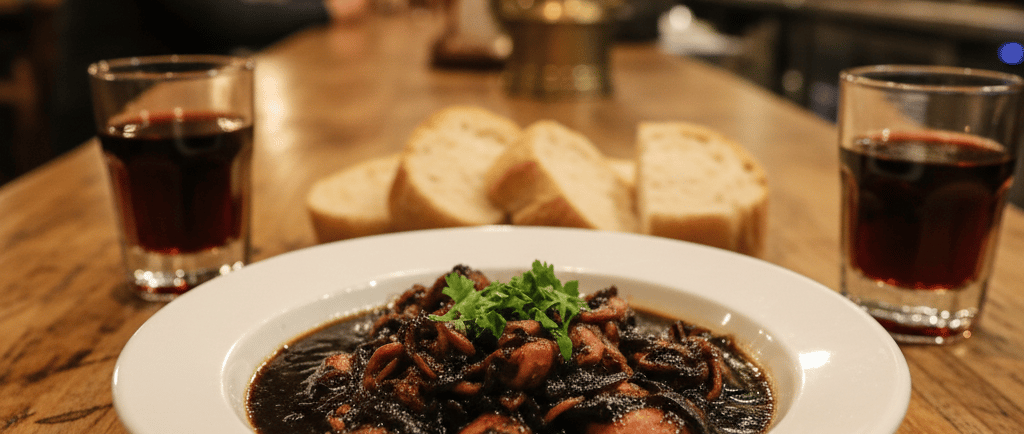
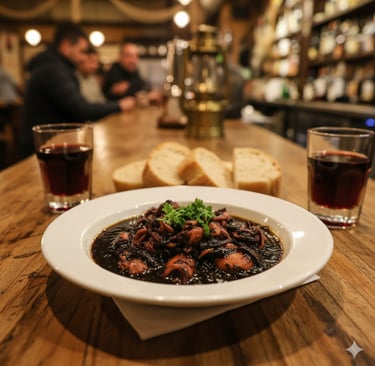
The Sepia con Cebolla en su Tinta (Cuttlefish with Onions in its Ink) is a deeply flavorful, jet-black stew that showcases the ingenuity of Cantabrian coastal cooking. This dish is rich, complex, and utterly unique, proving that the most dramatic presentation often comes from the sea itself. It is a slow-cooked masterpiece, where sweet, caramelized onions meld with tender cuttlefish and the intensely savory black ink, resulting in a sauce that is velvety, briny, and profoundly satisfying.
The Black Gold of the Cantabrian Sea
In the fishing villages of Cantabria, this dish is a testament to the zero-waste philosophy: every part of the fresh catch is utilized, especially the ink, which acts as both a natural dye and a powerful seasoning agent.
The Tradition
The preparation of Sepia en su Tinta is typically reserved for special family gatherings or Sunday lunches, as it requires patient, slow cooking. The intense black color is striking and signifies the depth of flavor achieved through the prolonged interaction between the cuttlefish, the onion sofrito (the soul of the sauce), and the ink. The final result is a sweet-and-savory experience that beautifully contrasts the sweetness of the onion with the dark, metallic brininess of the ink. It’s a dish best paired with white rice, which serves as a canvas for the magnificent black sauce.
Process
Step-by-Step Mastery: Achieving the Deep Black Sauce
Phase 2: The Extended Sofrito (The Sweet Base)
The Slow Start: In a large, heavy-bottomed pot or casserole dish, heat the Extra Virgin Olive Oil over medium-low heat. Add the finely diced onions and the diced green pepper (if using).
The Sweat: Sauté the onions and pepper very slowly for 20 to 30 minutes. The onions must be fully translucent, completely soft, and starting to caramelize slightly, developing a deep sweetness. This long, slow cook is vital; the sweetness balances the ink's brininess.
Garlic and Flour: Add the minced garlic and sauté for 2 minutes (do not burn). Stir in the tablespoon of flour and cook for 1 minute; this roux will help thicken the sauce later.
Wine Reduction: Pour in the remaining white wine and allow it to simmer and reduce by half (about 5 minutes), scraping up any browned bits from the bottom of the pan.
Searing the Cuttlefish: Increase the heat to medium. Add the cuttlefish pieces to the sofrito. Cook for 5 to 8 minutes, stirring occasionally. The cuttlefish will release its own moisture and begin to firm up.
The Liquid: Pour in the fish stock (or water) and bring the mixture to a gentle simmer.
Adding the Ink: Pour the reserved ink and wine mixture into the pot. Stir immediately and thoroughly. The sauce will instantly turn a deep, dramatic, jet black.
The Long Simmer: Bring the stew back to a slow, gentle simmer. Season lightly with salt. Cover the pot and allow the cuttlefish to stew very slowly for 1 to 1.5 hours. The long, low cook is essential to tenderize the cuttlefish. It is ready when a piece can be easily cut with a fork.
Phase 3: The Stew and the Ink Integration
Phase 4: Serving
Resting: Once the cuttlefish is tender, turn off the heat and let the stew rest for 10 minutes. The sauce will thicken slightly as it cools.
The Garnish (Optional): Many Cantabrians prefer to keep the garnish simple, but a sprinkle of finely chopped parsley provides a lovely visual contrast to the deep black sauce.
Presentation: Serve piping hot. The traditional accompaniment is a simple mound of plain white rice—the neutral rice is the perfect textural and flavor counterpoint to the rich, dark, complex sauce, designed to soak up every drop.
Phase 1: Preparation (Ink Extraction is Key)
Cuttlefish Cleaning: Carefully clean the cuttlefish. Separate the mantle (body) from the head and tentacles. Crucially, locate and gently remove the small, silvery-black ink sacs. Do not pierce them!
Preparing the Ink: Place the ink sacs in a small bowl. Add 50 ml (3 tbsp) of the white wine and a tiny splash of the fish stock. Carefully break the sacs to release the ink, using a wooden spoon to stir and dissolve the ink into the liquid. Strain this liquid through a fine sieve to remove any remaining sac membrane. Set aside.
Cuttlefish Cutting: Slice the cuttlefish mantle into small, bite-sized strips or squares (about 2-3 cm). Slice the tentacles as well. Pat the pieces dry.
Expert Tips for a Perfect Finish
Cuttlefish vs. Squid: While this recipe works with squid (calamar), cuttlefish (sepia) is preferred because its meat is thicker and benefits more from the slow stewing process. Its ink is also slightly milder than squid ink.
Tenderizing Check: If after 90 minutes the cuttlefish is still rubbery, continue simmering it for another 15-20 minutes. It requires patience, but the meat will eventually become wonderfully tender.
The Onion Secret: Do not rush the sofrito. The profound sweetness achieved by slow-cooking the onions is crucial, as it provides the balance necessary to counteract the inherent bitterness and salinity of the ink.
Pairing: The intensity of the sauce calls for a robust, aromatic, and sometimes slightly oak-aged white wine, or even a very light-bodied red wine from the Rioja Alavesa region.