
Clams in Casserole
Traditional Recipe to cook Clams in Casserole
CANTABRIA
12/13/20253 min read
The Essentials: Ingredients List (For 6 Servings)
Recipe Summary
Prep Time 10 minutes
Purging Time 2-3 hours (Essential for sand removal)
Cook Time 10-15 minutes
Servings 4 people (Appetizer/Starter)
Origin Coastal Cantabria, Spain
Cuisine Spanish / Cantabrian Seafood
The Star:
1 kg (2.2 lbs) Fresh Clams (Almejas), high quality, medium size.
The Sauce Base (The Marinera):
60 ml (1/4 cup) Extra Virgin Olive Oil.
4-6 Cloves Garlic, thinly sliced.
1 Small Onion or Shallot, very finely minced (optional, for sweetness).
1 Tbsp All-Purpose Flour (or 1 tsp fine breadcrumbs, to bind).
100 ml (approx. 7 tbsp) Dry White Wine (e.g., Albarino or local Cantabrian white).
A pinch of Sweet Paprika (Pimentón Dulce).
1 Tbsp Fresh Parsley, finely chopped.
Coarse Sea Salt, to taste (use sparingly).
Briny Simplicity: Mastering Clams in Casserole (Almejas a la Marinera) with the Cantabrian Method
The Almejas a la Marinera (Clams in Mariner's Sauce) is a testament to the elegant simplicity of Cantabrian cuisine. Found in every taberna and fine restaurant along the coast from Santoña to San Vicente de la Barquera, this dish relies entirely on the quality of the clams and a light, flavorful sauce (marinera) that enhances, rather than masks, the natural brininess of the seafood. It is a quick-cook masterpiece, perfect as a tapa or a refined starter.
The Philosophy of the Cantabrian Marinera
In Cantabria, the marinera sauce is distinctively light and clean. While some regional versions might use tomato or cream, the classic Cantabrian approach is minimalist: a base of gentle olive oil, garlic, white wine, and a touch of flour or breadcrumbs to slightly bind the liquid.
The Focus on Freshness
The core tradition here is the rapid cooking of the clams. The goal is to steam the clams open quickly in the presence of the aromatic sauce base, ensuring the meat remains tender and succulent, and allowing the clam liquor to release its salty, complex essence directly into the sauce. This final caldo (broth) is the heart of the dish—rich, savory, and begging to be soaked up with crusty bread.
Process
Step-by-Step Mastery: The Rapid Clam Steam
Phase 2: Building the Marinera Sauce
The Vessel: Use a wide, shallow pan or a traditional earthenware cazuela. Heat the Extra Virgin Olive Oil over medium-low heat.
Aromatic Start: Add the thinly sliced garlic (and the minced onion/shallot, if using). Sauté gently for 5 minutes. The garlic must become soft and golden, but must not burn or brown, which would make the sauce bitter.
The Binder: Reduce the heat to low. Stir in the tablespoon of flour or breadcrumbs and the pinch of sweet paprika. Stir constantly for 1 minute to cook the raw taste out of the flour (roux light).
The Wine Reduction: Pour in the dry white wine. Increase the heat slightly and allow the wine to bubble and reduce by half (about 3 minutes), scraping up any caramelized bits from the bottom of the pan.
Adding the Clams: Increase the heat to medium-high. Add the purged, drained clams to the cazuela.
The Cover and Steam: Cover the pan tightly with a lid. Allow the clams to steam vigorously for 3 to 5 minutes. The heat traps the steam, cooking the clams and forcing them open, releasing their precious, salty liquor into the sauce.
Final Finish: Remove the lid. Discard any clams that did not open. Taste the broth—it should be perfectly seasoned by the clam liquor; add salt only if absolutely necessary. Stir in the freshly chopped parsley.
Phase 3: The Clam Cook (The Burst of Flavor)
Phase 1: Preparation (Purging the Clams)
The Purge (Crucial): Place the fresh clams in a large bowl of cold water. Add 2-3 tablespoons of coarse sea salt. The high salinity mimics their natural environment, encouraging them to expel any sand. Let them sit for 2 to 3 hours.
Rinsing: After purging, lift the clams out of the salty water (leaving any sand behind) and rinse them thoroughly under cold running water. Discard any clams that are open and do not close when tapped. Pat them lightly dry.
Phase 4: Serving
Immediate Service: Almejas a la Marinera must be served immediately, while still sizzling. The rapid cooking process ensures the clam meat is tender, plump, and full of flavor.
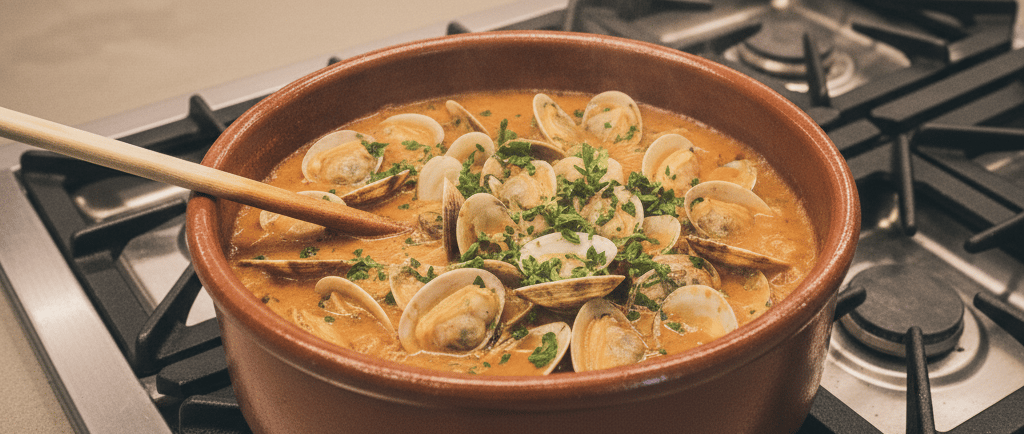
Presentation: Serve directly in the cazuela or the pan used for cooking. The Cantabrian tradition is to serve this dish with plenty of crusty French bread on the side, essential for soaking up every drop of the luxurious marinera sauce (hacer sopas).
Expert Tips for a Perfect Finish
No Compromise on Clams: The success of this dish is entirely dependent on the quality and freshness of the clams. Use fresh clams from a trusted source, and never skip the purging step.
The Binding Agent: The flour or breadcrumbs are used sparingly. Their only purpose is to slightly thicken the liquid into a creamy sauce that coats the bread, rather than making a thick stew.
The Quick Cook: Avoid overcooking the clams. Once they pop open, they are done. Cooking them longer will result in tough, rubbery meat.
Pairing: This classic starter is best paired with a cold, dry, crisp Spanish white wine, such as an Albariño or a local Cantabrian white, which perfectly matches the salinity of the clams.