
Beans with Verdinas
Traditional Recipe to cook Beans with Verdinas
ASTURIAS
12/11/20254 min read
The Essentials: Ingredients List (For 4 People - Tasting Portion)
Recipe Summary
Prep Time 10 minutes
Soaking Time 12 hours (Overnight)
Cook Time 2.5 - 3 hours (low and slow)
Servings 4 people (Main Course)
Origin Coastal Asturias, Spain
Cuisine Spanish / Asturian Traditional
The Star:
400 g (approx. 2 cups) Dried Verdina Beans (Fabes Verdinas). (Do not substitute with large white beans).
The Seafood Accompaniment:
500 g (1.1 lbs) Fresh Clams (Almejas), purged and rinsed.
8 Large Prawns or Langoustines (Langostinos), peeled (optional, tails on).
The Aromatics & Liquids:
1 Small White Onion, finely diced.
2 Cloves Garlic, sliced.
50 ml (3 tbsp) Extra Virgin Olive Oil.
150 ml (2/3 cup) Dry White Wine.
750 ml (3 cups) Fish Stock (or water).
A pinch Saffron Threads (Azafrán), optional.
Coarse Sea Salt, to taste.
1 tbsp Fresh Parsley, finely chopped (for garnish).
The Emerald Jewels: Mastering the Asturian Beans with Verdinas (Fabes con Verdinas)
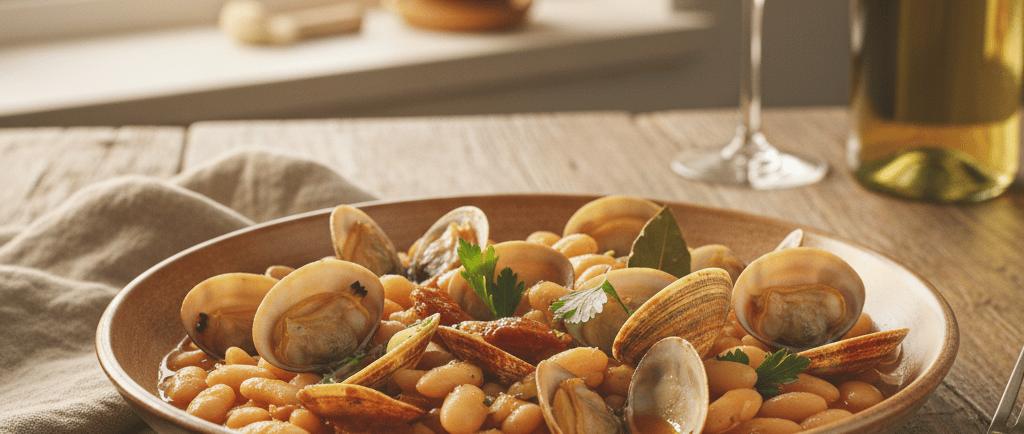
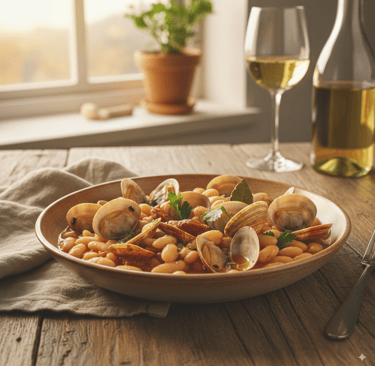
The Fabes con Verdinas (Beans with Verdinas) is a sublime example of Asturian cuisine, showcasing a unique local ingredient: the Verdina bean. Originating primarily from the coastal plains and river valleys of Asturias, this dish stands out from other hearty Spanish stews (fabadas) due to the exceptional delicacy, thin skin, and melt-in-your-mouth texture of the Verdina bean itself, often referred to as "the green jewel" of Spanish pulses.
The Legend and Legacy of the Verdina Bean
Unlike the larger, whiter beans used in the classic Fabada Asturiana, the Verdina bean is smaller and maintains a beautiful pale emerald-green hue even after cooking.
The Origin Story
The Verdina bean is believed to have mutated accidentally from another variety in the lush, humid microclimate near the Asturian coast, specifically in areas close to Llanes. Its scarcity and the delicate, labor-intensive harvesting process—it must be picked just before it fully dries—contribute to its prestige and higher cost. It is a symbol of Asturian agricultural quality.
The Culinary Tradition
While the classic Fabada uses pork and chorizo, Fabes con Verdinas is traditionally prepared with delicate seafood, such as clams (almejas), prawns, or even sea urchins. This preparation respects the bean's light, buttery flavor, ensuring the seafood enhances rather than overpowers the main ingredient. It is a winter warmer, traditionally served at family gatherings and throughout the colder months, celebrated for its smooth, comforting texture.
Process
Step-by-Step Mastery: The Asturian "Asustado" Technique
Phase 2: The Slow Bean Cook (The Gentle Secret)
The Starting Liquid: Drain the soaked beans completely. Place them in a large, heavy-bottomed pot. Cover them with fresh, cold water (or fish stock) by about 3-4 cm (1.5 inches). Add the whole diced onion and the sliced garlic (or reserve them for the sofrito).
The Initial Boil: Bring the liquid to a gentle boil over medium heat. Skim off any foam that rises to the surface.
The "Scaring" (Asustado of the Bean): As the water boils, pour in a splash of cold water (about 50 ml). This stops the boil immediately. This thermal shock is the classic Asturian technique used to break the skin gently, ensuring the beans cook evenly without their skins splitting. Repeat this "scaring" technique twice more during the first hour of cooking.
The Simmer: Reduce the heat to the absolute lowest setting—a very gentle simmer. Cover the pot and allow the beans to cook for 1.5 to 2 hours, or until they are nearly tender. Do not stir with a spoon! Gently shake the pot occasionally to prevent sticking.
Making the Sofrito (Optional Method): If you reserved the onion and garlic, sauté them in olive oil until soft. Add the white wine and saffron threads (if using), and reduce slightly. Pour this sofrito into the beans when they are nearly tender.
Seasoning the Broth: Add the olive oil and white wine (if not already added in a sofrito). Season the broth lightly with salt. Simmer for 15 minutes.
The Clams and Prawns: Increase the heat to medium. Add the purged clams and the prawns to the pot.
The Final Simmer: Cover the pot and cook for 5 to 8 minutes. The dish is ready when the clams have fully opened and the prawns are opaque. Crucially, do not overcook the beans once the seafood is added. Discard any unopened clams.
Phase 3: Integrating the Seafood
Phase 4: Serving
Resting: Turn off the heat and let the Fabes con Verdinas rest for 10 minutes. The flavors will deepen, and the sauce will thicken naturally due to the starch released by the beans.
Presentation: Serve piping hot in deep bowls. The broth should be creamy, light green, and coat the beans and seafood beautifully. Garnish with a sprinkle of fresh parsley.
Phase 1: Preparation (The Day Before)
Soaking the Beans (Crucial): Rinse the Verdina beans quickly. Place them in a large bowl and cover them generously with cold, non-chlorinated water. Soak overnight for 12 hours. They should swell considerably.
Clam Purging: Place the clams in a bowl of cold, heavily salted water (3 tbsp of salt per liter) for at least 2 hours to purge any sand. Rinse thoroughly before cooking.
Expert Tips for a Perfect Finish
The Soft Water Rule: To achieve the perfectly tender texture of the Verdina bean, use water with a low mineral content (soft water or filtered water) for both soaking and cooking. Hard water can toughen the bean skins.
The Seafood Balance: The beauty of this dish is the balance. Avoid using heavy or smoked meats, which belong in the Fabada. Here, the delicate white wine and seafood are the perfect counterpoint to the buttery Verdina.
The Gentle Shake: Never use a spoon to stir the beans once they start cooking. Always use the Asturian technique: gently rock the pot back and forth to prevent the beans from breaking and releasing too much starch.
Pairing: The subtle elegance of this dish is best paired with a crisp, slightly acidic Asturian cider (Sidra Natural) or a young, fresh Spanish white wine, such as a crisp Godello or a light Albariño.